
The small villages, nestled among the mountains, have represented the true economic engine of many regions, with their artisanal production chains, later supplanted by mechanical processing means.
This is the case of Civita, in the heart of the Pollino Park in Calabria, whose economy was based, among other things, on textile activity as demonstrated by the Eco-Museum of the Ancient Filanda of the Filardi family.
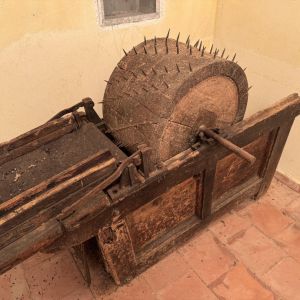
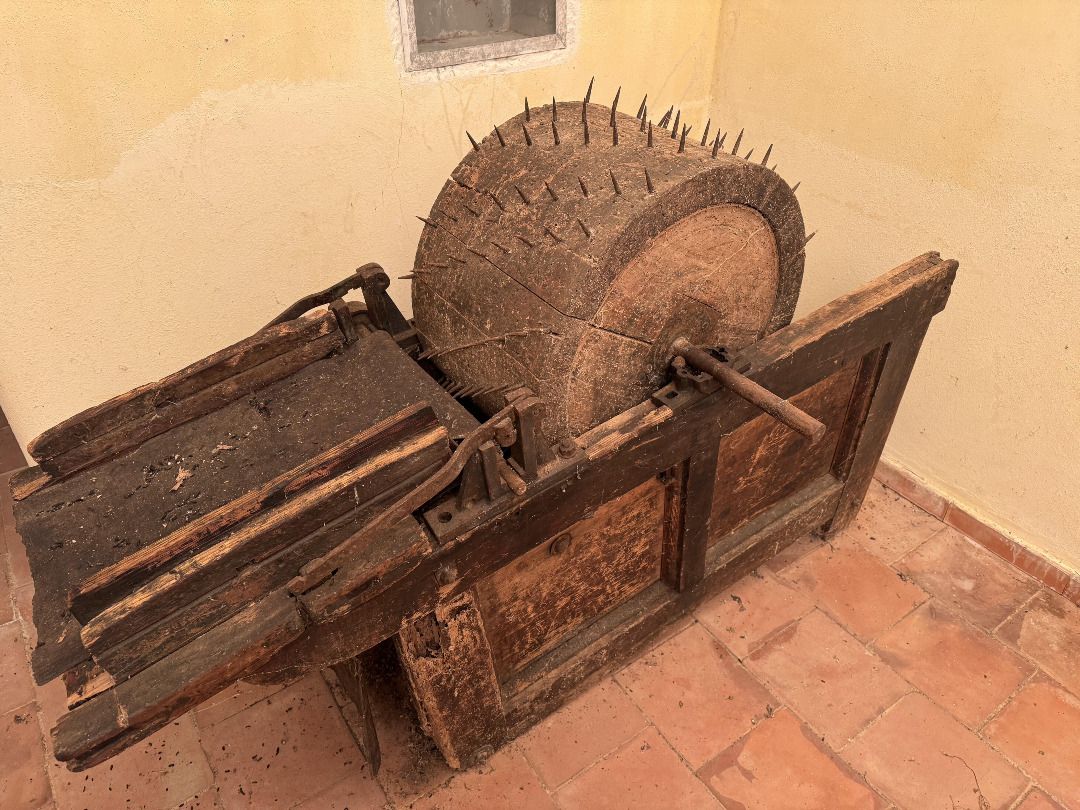
Heavy wooden machines still live today in the premises of the Filanda; a complex of textile and industrial archaeology that testifies to the process of transforming wool into a finished product.
Located along the banks of the Raganello river, on the path leading to the Devil's Bridge, the Filanda exploited the hydraulic energy produced by the waterfall of two large tanks, still intact, to activate the production process. The building's three main areas meticulously carried out each cycle of transforming the "fleece" into carded or combed wool: carded wool is the type of wool subjected to carding, a process that makes the wool softer and easier to work through the felting technique; combed wool, on the other hand, is a smooth, homogeneous, thin, and regular natural yarn.
Civita is part of the network of the Most Beautiful Villages in Italy, located in the heart of the Pollino National Park and the Gole del Raganello Nature Reserve, and represents one of the oldest Arbëreshë communities in Italy.
Walking through the historic center of Civita, the eye cannot help but be attracted by the small houses with human-like features: the entrance door resembles the mouth, the chimney the nose, the windows the eyes. These are the Kodra houses, named after Ibrahim Kodra, an internationally renowned Albanian painter, as these anthropomorphic houses recall the lines and shapes of his painting.
Another architectural feature of the historic center of Civita is represented by the chimneys, distinctive for each house; they served various functions, such as emitting smoke rising from the fireplace but also rituals related to superstition. It was believed that the chimneys kept evil spirits away, which is why they were built in strange and particular shapes.
Other places to explore:
- Devil's Bridge - Civita
- Kodra Houses - Civita
- Museum of Icons and Byzantine Tradition - Frascineto